
In the sophisticated world of men’s tailoring, three distinct silhouettes dominate the landscape: the structured British style, the flamboyant Italian cut, and the understated, functional American Cut suit. Understanding the nuances of these cuts is essential, especially the American Cut. In this guide, we will explore the defining characteristics of the American Cut suit, how it stacks up against British and Italian tailoring, and why it remains the ultimate choice for the modern gentleman who values comfort without sacrificing class.
1. What Is an American Cut Suit?
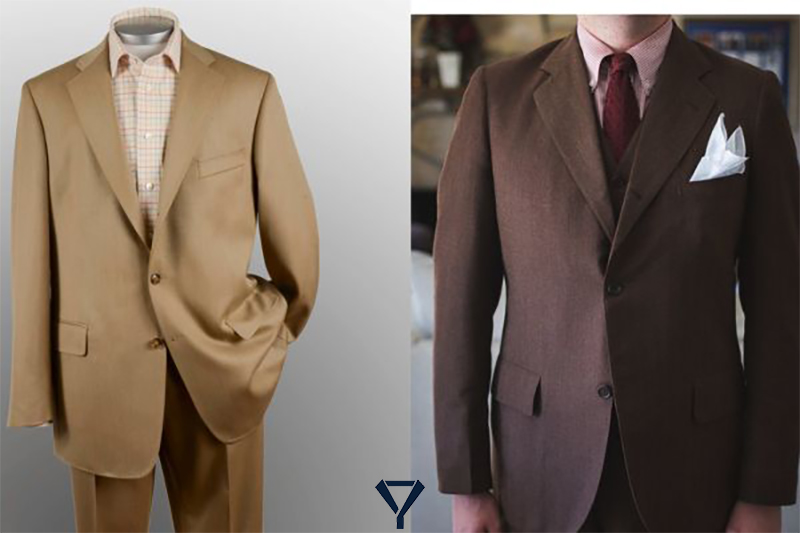
An American Cut Suit is a traditional style of tailoring that puts comfort, practicality, and quiet confidence above sharp structure or dramatic silhouette. Also famously known as the “Sack Suit,” the American cut has been a cornerstone of Ivy League style and corporate boardrooms for over a century.
Unlike its European counterparts that prioritize sharp angles and slim silhouettes, the American cut is defined by its “natural” approach. It favors comfort, ease of movement, and a democratic fit that suits almost every body type.
The jacket hangs cleanly from the shoulders with little to no waist suppression, creating a silhouette that feels easy, honest, and unforced. To an untrained eye, it may seem simple, almost plain. But that simplicity is intentional. Every line serves a purpose.
2. History of the American Cut Suit
The American Cut Suit did not emerge from royal courts or fashion salons. It was born out of Industrial America, at a time when the country was expanding rapidly, and clothing needed to keep up with real life. As factories grew and cities filled with office workers, the demand for suits that were practical, affordable, and comfortable increased dramatically.
This was also the era when ready-to-wear tailoring began to dominate the American market. Unlike Europe, where bespoke tailoring remained the standard, American menswear focused on producing garments that could fit a wide range of body types straight off the rack.
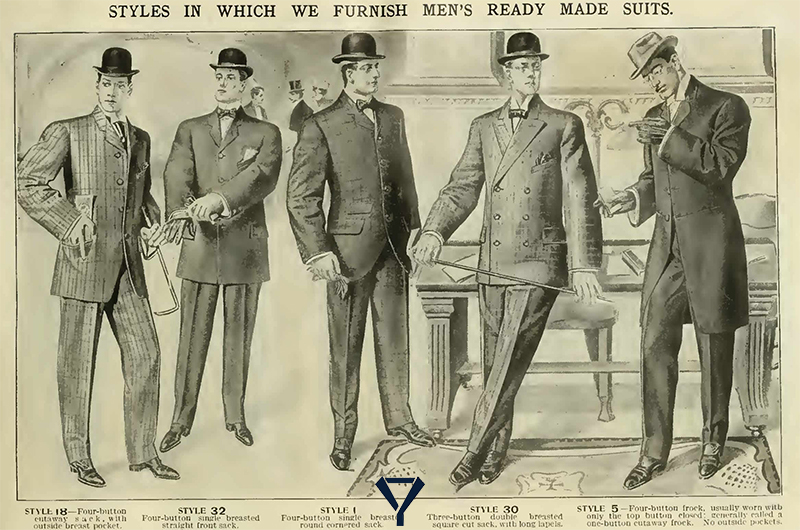
No name is more closely tied to this development than Brooks Brothers. In the early 20th century, the brand introduced the now-legendary No.1 Sack Suit, a jacket with a straight silhouette, natural shoulders, and minimal internal structure. It was a radical departure from the heavily shaped European coats of the time.
The design philosophy behind the American Cut was clear and deliberate. It needed to suit the broader, taller, and more varied physiques of American men. It had to be easy to manufacture at scale, reliable in fit, and comfortable enough to be worn all day. In short, it had to work.
Over time, the American Cut Suit became deeply associated with Ivy League style, worn by students, professors, and professionals who valued tradition without excess. This look later evolved into what we now recognize as Preppy style: clean, classic, and quietly confident.
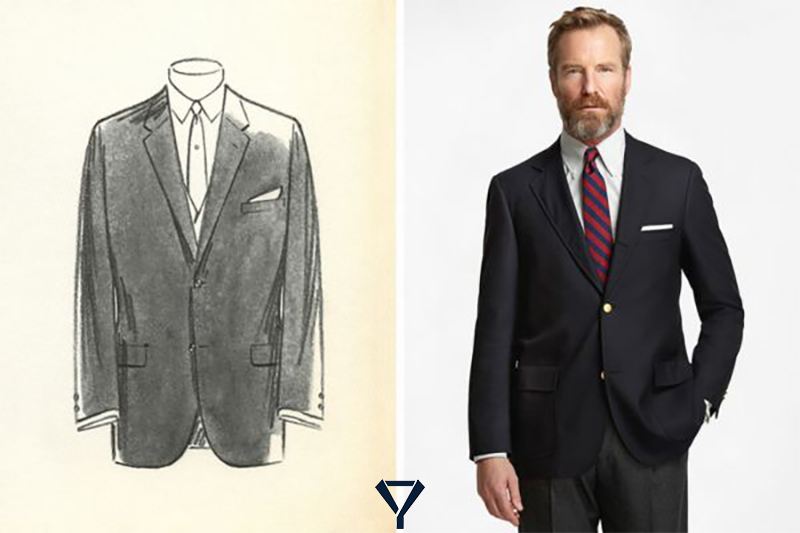
Today, when we look at the American Cut Suit, we are not just looking at a tailoring style but a piece of American cultural history. One shaped by industry, practicality, and a belief that good clothing should serve the man, not the other way around.
3. Key Characteristics of an American Cut Suit
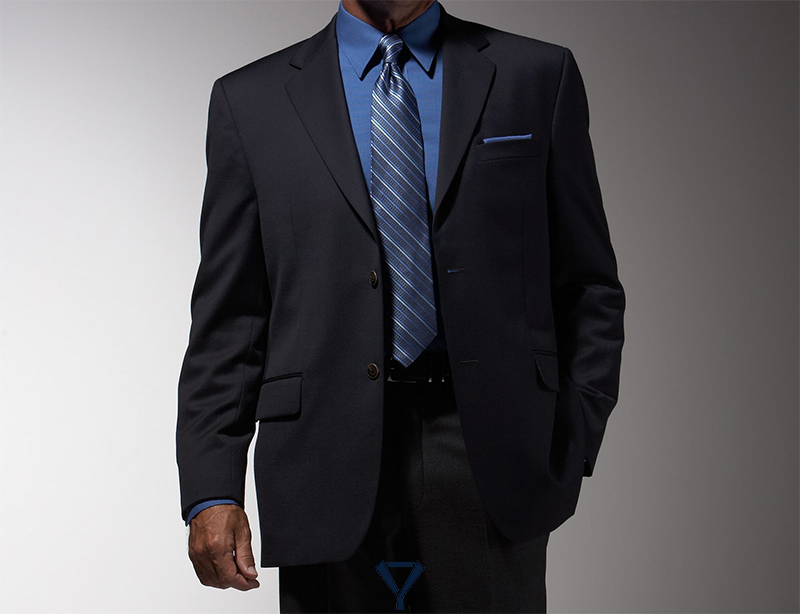
The easiest way to recognize an American Cut Suit is to look at how it behaves on the body. This style is not built to shape, sculpt, or exaggerate. Instead, it is designed to sit naturally, allowing the wearer to move, work, and live comfortably throughout the day.
Straight and Relaxed Fit
The silhouette of an American Cut Suit is straight, clean, and relaxed. The jacket follows a boxier line compared to European tailoring, with little to no waist suppression. Rather than pulling in sharply at the midsection, the coat hangs in a natural line from the shoulders down to the hips.
This straight cut serves a clear purpose, allowing the suit to fit a wide range of body types while remaining comfortable during long hours of wear.
Whether sitting at a desk, walking between meetings, or standing throughout the day, the wearer never feels restricted. The emphasis is not on showing the shape of the body, but on maintaining balance and ease.

Natural Shoulder Construction
Another hallmark of the American Cut Suit is its natural shoulder construction. The shoulders are either completely unpadded or lightly padded, allowing them to reflect the wearer’s natural shoulder line rather than imposing a rigid shape.
The American Cut favors softness, resulting in a jacket that looks approachable, understated, and comfortable. This natural shoulder contributes greatly to long-term wearability, reduces pressure on the neck and upper body, and helps the jacket drape smoothly over time.
The Sack Suit Design Philosophy
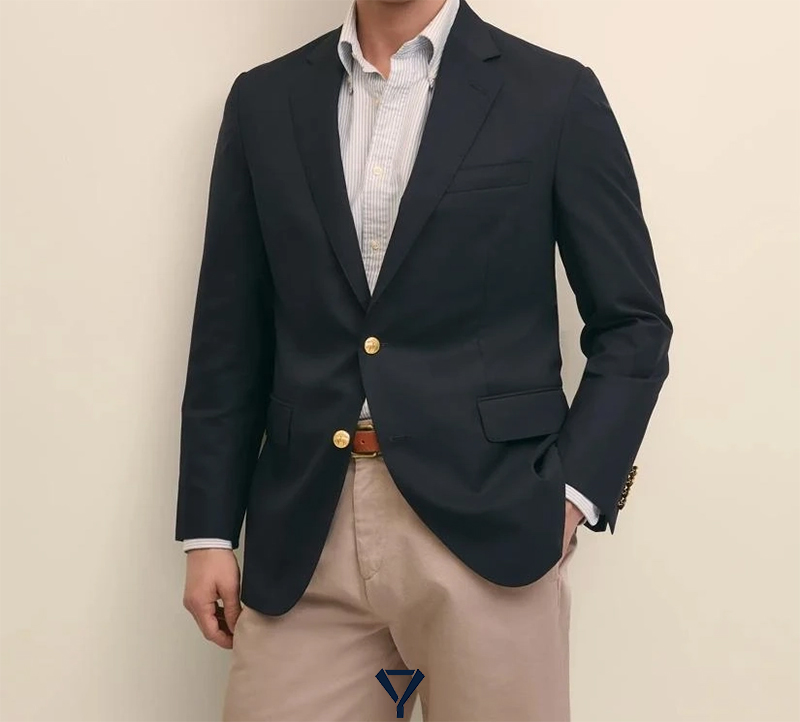
The jacket is designed to hang freely, without aggressive shaping or internal structure. It does not force the body into a predetermined form; instead, it allows the body to exist comfortably within the garment.
This approach makes the Sack Suit exceptionally versatile. It works well on different body shapes, adapts easily to movement, and transitions smoothly from formal to more casual settings. The same jacket can be worn as part of a full suit or paired with separate trousers for a relaxed, everyday look.
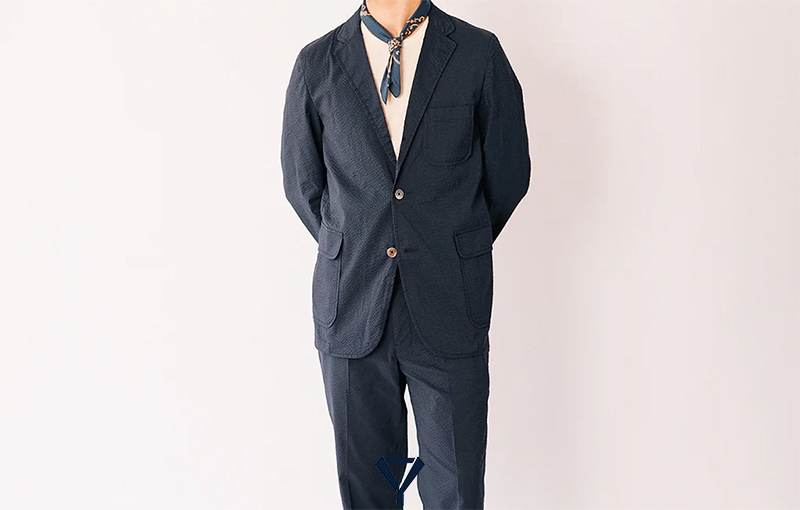
Buttons: The Classic 3-Roll-2 Front
At first glance, the jacket appears to have three buttons, but in practice, only the middle button is meant to be fastened. The top button rolls naturally into the lapel, while the bottom button is left undone.
This design became a defining feature of Ivy League tailoring, striking a perfect balance between structure and ease. It offers the visual presence of a three-button jacket without the stiffness that often comes with it. The result is a front that feels relaxed, balanced, and distinctly American.
This 3-roll-2 front adds quiet character. It softens the chest, lengthens the lapel line, and gives the jacket a slightly casual attitude, without sacrificing respectability.

Armhole & Comfort
Compared to Italian or British tailoring, the American Cut Suit armholes are set lower. This design choice prioritizes comfort and freedom of movement, especially for men who spend long hours sitting, standing, and moving throughout the workday.
Lower armholes reduce tension across the shoulders and chest, making the jacket easier to wear over extended periods. For office professionals, educators, and anyone who lives in their suit from morning to evening, this comfort becomes immediately noticeable.
There is, of course, a trade-off. Lower armholes can appear less sharp or sculpted than the higher, tighter armholes found in European tailoring. But that is a conscious decision, not a flaw.
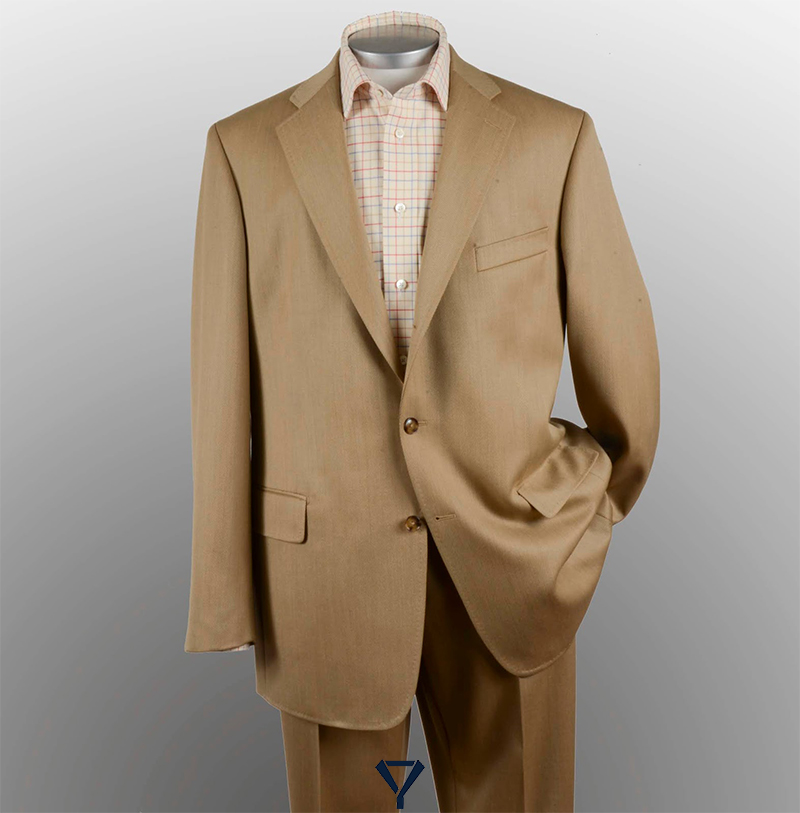
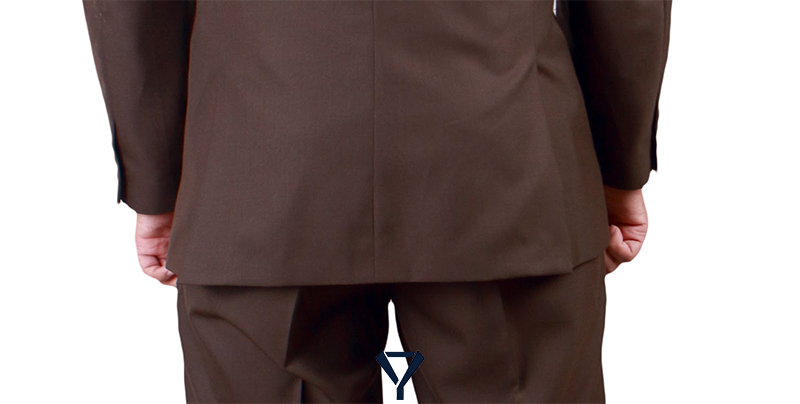
Single Vent or No Vent
The most common vent option for the American cut is a single center vent, though some classic Sack Suits feature no vent at all.
- A single vent allows the jacket to drape cleanly while maintaining freedom of movement, especially when sitting or walking.
- No-vent jackets, on the other hand, offer a cleaner back profile and a more conservative appearance.
Both options align with the American philosophy of restraint. Nothing is added unless it serves a clear purpose. The focus remains on balance, comfort, and a clean silhouette rather than decorative detail.
Pockets, Lapels, and Functional Details
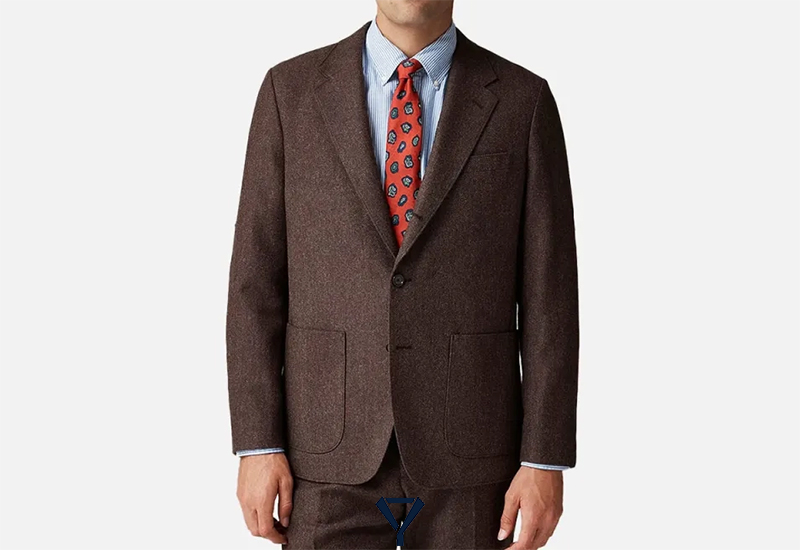
Flap pockets are the standard choice for the American Cut Suit, offering a traditional, business-appropriate look that works in nearly any setting. For a more relaxed or collegiate feel, patch pockets are sometimes used, especially on jackets intended for casual wear.
Lapels are typically notch lapels, the most versatile and understated option in tailoring. They suit the straight silhouette of the Sack Suit perfectly and reinforce its classic, no-nonsense character.
Together, these details may seem modest, but they are carefully chosen. Each one supports the American Cut’s identity as a suit designed to be worn often, styled easily, and trusted over time.
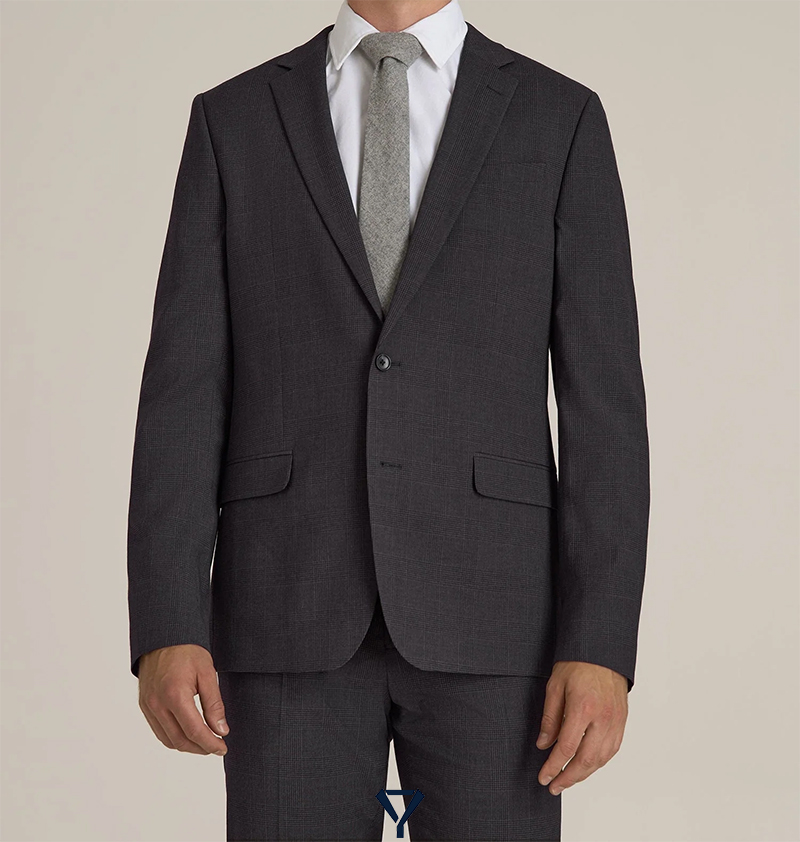
4. American Cut vs. British Cut vs. Italian Cut: Understanding the Differences
To truly understand the American Cut Suit, it helps to see it side by side with the other two major tailoring traditions: British Cut and Italian Cut. While all three serve the same basic purpose, they reflect very different philosophies about how a suit should look, feel, and function.
At a glance, the difference comes down to one question: Should a suit shape the body, or accommodate it? American tailoring chooses accommodation. British and Italian tailoring, each in its own way, choose structure.
Key Differences at a Glance
| Feature | American Cut | British Cut | Italian Cut |
|---|---|---|---|
| Fit (Silhouette) | Straight, relaxed, minimal waist suppression | Structured, shaped, defined waist | Slim, close-fitting, body-conscious |
| Shoulder Structure | Natural shoulder, little to no padding | Strong, padded, square shoulder | Soft but high shoulder, lightly structured |
| Armhole | Lower armhole for comfort | Medium armhole, balanced | High armhole for mobility and sharpness |
| Vents | Single vent or no vent | Double vents | Often no vent or double vents |
| Overall Style | Practical, understated, classic | Formal, authoritative, traditional | Elegant, stylish, expressive |
| Formality Level | Medium | High | Medium to high |
American Cut vs British Cut
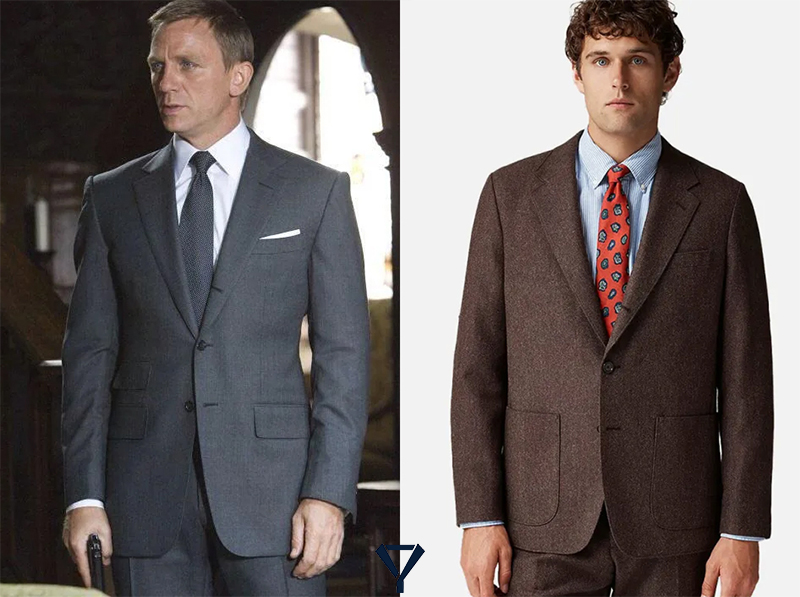
The difference between an American Cut suit and a British Cut suit comes down to comfort versus structure.
The American Cut is known for its relaxed fit and natural balance. The jacket hangs cleanly from the shoulders, with very little waist suppression, allowing the body to move freely. It’s a practical, forgiving style.
British tailoring, by contrast, is built on structure and authority. Padded shoulders, a defined chest, and a nipped-in waist create a sharp, commanding silhouette rooted in military and formal traditions. The trade-off, however, is comfort. That firm structure can feel restrictive over time.
American Cut vs Italian Cut
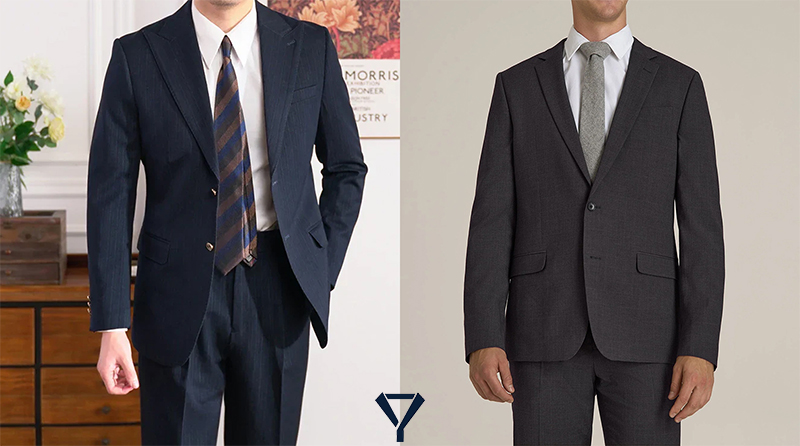
When comparing the American Cut to the Italian Cut, the contrast is ease versus expression.
American tailoring prioritizes function over display. The fit is roomier, the construction straightforward, and the overall look conservative and timeless.
Italian tailoring takes a different approach. With slimmer silhouettes, higher armholes, and lighter construction, the Italian Cut emphasizes movement and visual elegance. The jacket follows the body closely, highlighting shape and posture.
5. Who Should Wear an American Cut Suit?
The American Cut Suit is not designed for one specific body type or age group. It is designed for a way of life. This is a suit for men who value comfort, consistency, and quiet confidence over sharp trends or dramatic silhouettes.
Men Who Prioritize Comfort
If comfort is at the top of your list, the American Cut is hard to beat. Its relaxed silhouette, natural shoulders, and lower armholes make it one of the most comfortable suit styles available. This is not a suit that demands constant adjustment or forces you to “stand a certain way.” It moves with you, not against you.
Men Who Wear Suits All Day
The American Cut Suit truly shines in daily wear. Office professionals, educators, executives, and anyone who spends long hours in a jacket will immediately notice the difference. The softer construction reduces strain on the shoulders and chest, while the straight cut allows for comfortable sitting, standing, and walking throughout the day.
This is the kind of suit you can put on in the morning and forget about until the evening. A quality that experienced suit wearers learn to value over time.
Men with Broader or Less Tapered Builds
From a tailor’s point of view, the American Cut is especially forgiving. Men with a slightly fuller midsection or broader frame often find that heavily shaped suits exaggerate areas they would rather keep subtle. The American Cut avoids this problem by minimizing waist suppression and maintaining a balanced, vertical line.

Men Drawn to Preppy and Ivy League Style
The American Cut Suit is deeply rooted in Ivy League, Preppy, and classic American menswear traditions. If you are drawn to Oxford button-down shirts, loafers, repp ties, and timeless combinations rather than seasonal trends, this style will feel familiar and authentic.
It pairs naturally with conservative colors, traditional fabrics, and understated accessories, making it ideal for men who prefer elegance without excess.
6. When to Wear an American Cut Suit
The American Cut Suit was never designed for rare occasions. It was designed for real life. Understanding when and where it works best helps you get the most value out of this timeless style.
Traditional Office Wear
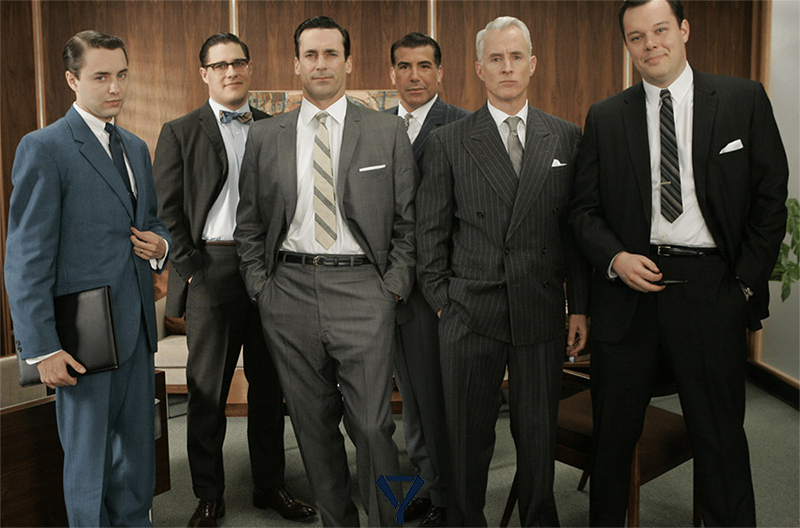
The American Cut Suit feels most at home in traditional office environments. Its clean lines, conservative silhouette, and understated details make it an excellent choice for workplaces that value professionalism without unnecessary formality.
Paired with an Oxford shirt and a classic tie, the American Cut presents a calm, dependable image. It communicates seriousness and competence without appearing rigid or overbuilt. For many professionals, this balance is exactly what makes it ideal for daily office wear.
Business Casual Environments
In modern business casual settings, the American Cut adapts easily. The relaxed structure allows the jacket to be worn with or without a tie, and even as a separate piece with contrasting trousers.
A Sack Suit jacket worn open over a button-down shirt looks natural, not forced. The soft shoulders and straight cut prevent the outfit from feeling too dressy, making it suitable for offices where comfort and approachability matter as much as appearance.
A True Daily Suit
One of the greatest strengths of the American Cut Suit is its ability to function as a daily suit. This is a suit you can wear multiple times a week without feeling worn down by it. The comfort-focused construction, forgiving fit, and practical fabric choices make it reliable for regular use.
A good daily suit should disappear on the body. You should be able to move, sit, work, and think without being constantly aware of what you are wearing. The American Cut excels at exactly that.
7. Fabrics Commonly Used in American Cut Suits
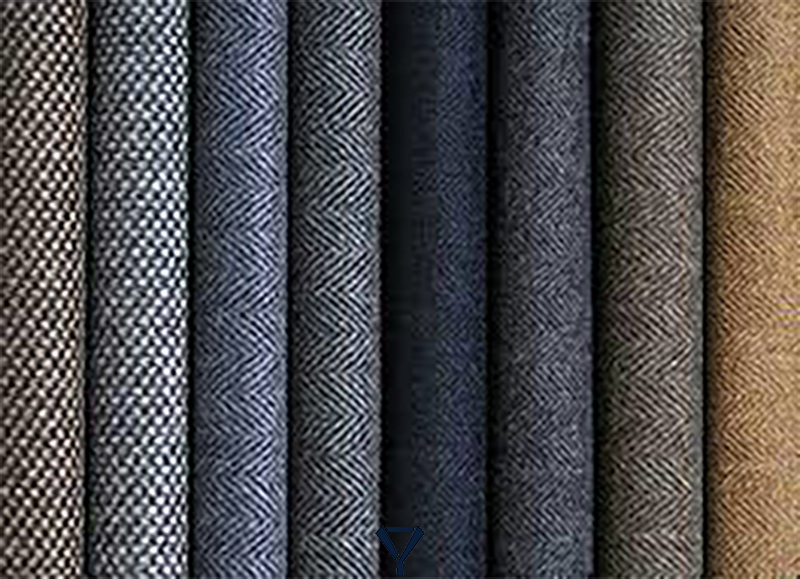
When it comes to the American Cut Suit, fabric choice is just as important as the cut itself. The idea is simple: a suit should serve the wearer, not demand constant care. Fabrics that hold their shape, recover well after wear, and age gracefully are always preferred over delicate, high-maintenance cloths.
Traditional Wool
Wool is the foundation of the American Cut Suit. It offers natural breathability, flexibility, and resilience. Medium-weight worsted wool is especially popular, as it holds its shape without feeling stiff and resists wrinkling better than many lighter fabrics.
For year-round use, wool remains the most reliable choice. It adapts well to different temperatures, drapes cleanly on the body, and maintains a professional appearance even after long hours of wear.
Flannel
Flannel is a classic option for cooler seasons. Its soft surface and slightly heavier weight add warmth without sacrificing comfort. In an American Cut silhouette, flannel enhances the relaxed nature of the suit, giving it a softer, more approachable look.
Flannel suits are particularly well-suited for fall and winter office wear. They pair naturally with Oxford shirts, knit ties, and traditional leather shoes, reinforcing the understated elegance of American tailoring.
Tweed
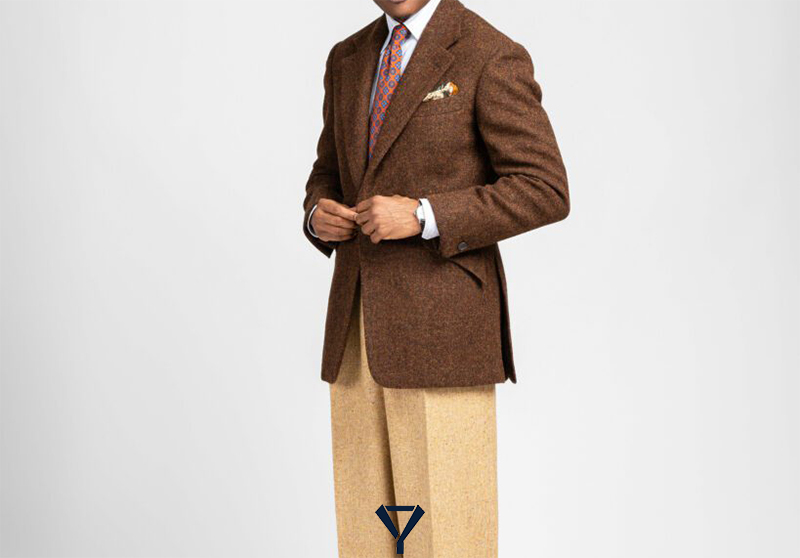
Tweed is another traditional fabric often associated with American collegiate and Ivy League style. Known for its durability and textured appearance, tweed is ideal for casual or semi-formal settings, especially in colder climates.
In an American Cut Suit, tweed emphasizes function over form. It is sturdy, forgiving, and built to last. Over time, a tweed suit develops character rather than wearing out.
Cotton and Seersucker for Warmer Weather
For warmer months, cotton and seersucker become practical alternatives. Cotton suits offer breathability and a relaxed appearance, making them suitable for summer offices or informal settings. Seersucker suits, with their puckered texture, allow air to circulate freely and minimize contact with the skin, keeping the wearer cool in high heat.
8. How to Style an American Cut Suit Today
Styling an American Cut Suit is less about making a statement and more about getting the balance right. This style of suit was never meant to look sharp through exaggeration. The rule is simple: keep it honest, keep it comfortable, and don’t overthink it.
Office Look
The most natural pairing is an Oxford button-down shirt, preferably in white or light blue. The button-down collar complements the soft shoulders and relaxed silhouette of the suit, creating a look that is polished without being stiff.
For ties, silk ties or repp ties work best. Repp ties, with their diagonal stripes, have deep roots in Ivy League style and reinforce the American heritage of the suit. Keep the knot simple to maintain a clean, unforced appearance.
When it comes to footwear, classic Derby shoes or traditional loafers are ideal. They provide enough formality for the office while matching the suit’s practical nature. The overall result is professional, balanced, and easy to wear from morning to evening.

Smart Casual / Ivy Look
For a more relaxed or smart casual look, the jacket can be worn as a separate piece with contrasting trousers like grey flannels, khakis, or even well-chosen chinos.
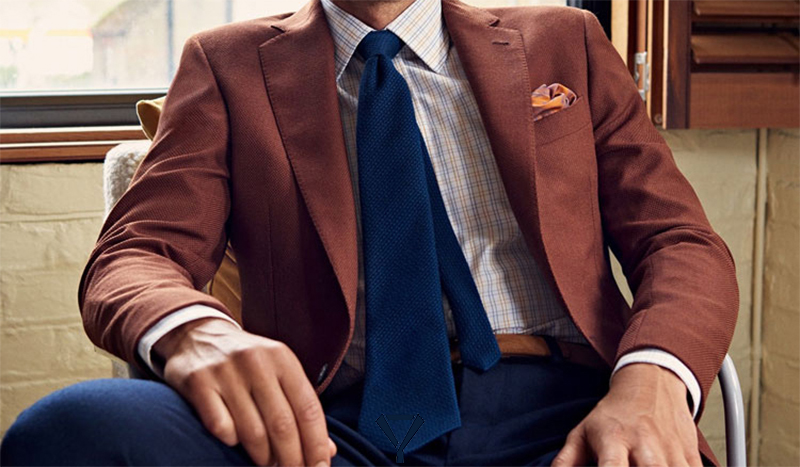
In this setting, a knit tie adds texture and a touch of personality without feeling dressy. Going without a tie is also perfectly acceptable, especially when paired with a button-down shirt worn open at the collar. The natural shoulder and straight cut prevent the outfit from looking incomplete or sloppy.
Footwear plays a key role here. Penny loafers are a classic choice, closely tied to Ivy League tradition. They keep the outfit grounded, casual, and unmistakably American, while still maintaining a sense of refinement.
Accessories: Keep It Simple and Purposeful
A simple pocket square, preferably in white linen or cotton, is more than enough. Fold it neatly, without dramatic peaks or complex styling. The goal is quiet polish, not visual flair.
A classic leather belt, ideally in brown or black, depending on your shoes, completes the look. Avoid oversized buckles or decorative stitching. Like the suit itself, the best accessories are the ones that quietly do their job.
Most importantly, avoid accessories that feel too “dressy” or theatrical. Flashy cufflinks, bold patterns, or overly shiny materials tend to clash with the American Cut’s restrained character.
Conclusion
In the end, a well-made suit is never just about trends or labels. It’s about proportion, balance, and how the garment works with your body and your life. Whether you’re investing in your first proper suit or refining a wardrobe you’ve built over the years, remember this: the best suit is the one that fits you well, feels right when you move, and holds up long after the season changes, just like any proper piece of American tailoring should.
Created from my passion for sartorial that I discovered through learning and working in the field, YOURSUITTREND is dedicated to providing in-depth knowledge, expert styling tips, and the latest trends in men’s tailored fashion. If you ever come to Vietnam, let’s grab a glass 🙂