There’s a reason the tuxedo jacket has never gone out of style. Since its debut, it has remained the gold standard of men’s formal dressing. But here’s where most men get confused: a tuxedo jacket is not just a fancier suit jacket. It’s a different category of garment entirely, with its own rules, details, and dress code purpose. So, what is a tuxedo jacket, exactly?
In this guide, you’ll get a clear breakdown of what makes a tuxedo jacket unique, how it differs from a standard suit jacket, what to wear with it, and when it’s actually appropriate to wear one with confidence!
1. What Is a Tuxedo Jacket?
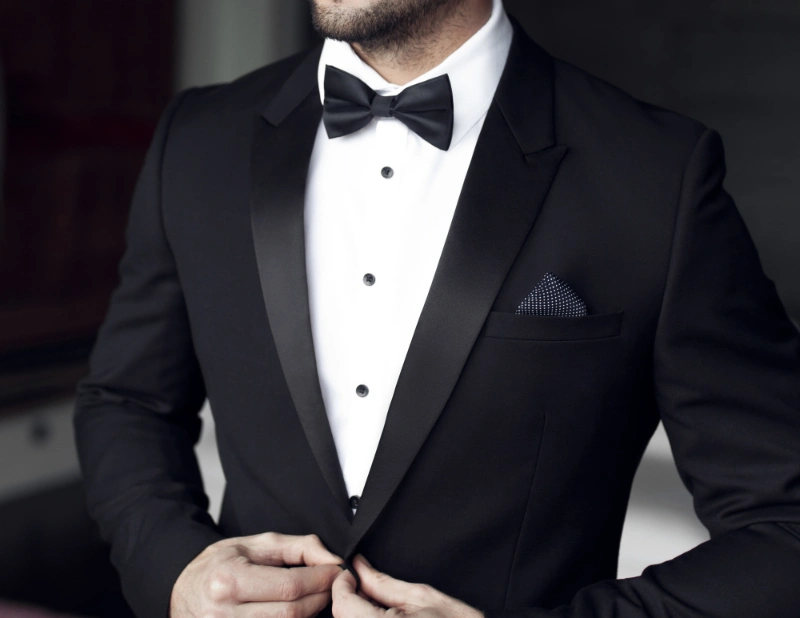
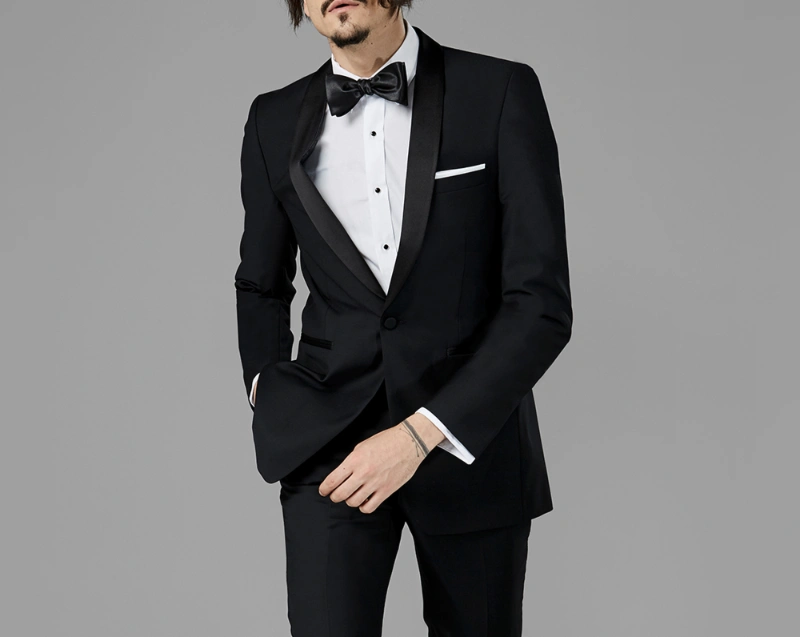
A tuxedo jacket (also known as a dinner jacket in British English) is a formal evening coat designed specifically for black-tie occasions. What sets it apart isn’t the cut or the color. It’s 1 little detail: the defining feature of satin.
Every tuxedo jacket carries satin or grosgrain silk trim on its lapels, its buttons, and the side stripe running down the trousers. These aren’t decorative flourishes but true functional signals. Under evening lighting, that subtle sheen catches the eye in a way that a matte wool suit simply cannot.
Traditionally, tuxedo jackets come in black or midnight blue, crafted from fine wool or barathea fabric. The lapels are either peaked or shawl-collared. The pockets are thrown: clean, flush, no flaps. Every design choice points in the same direction: simplicity, elegance, and intention.
2. A Brief History of the Tuxedo Jacket
The tuxedo jacket has a surprisingly specific origin story. It didn’t evolve gradually over centuries. It was born in one place, in one decade, among one very particular circle of men.
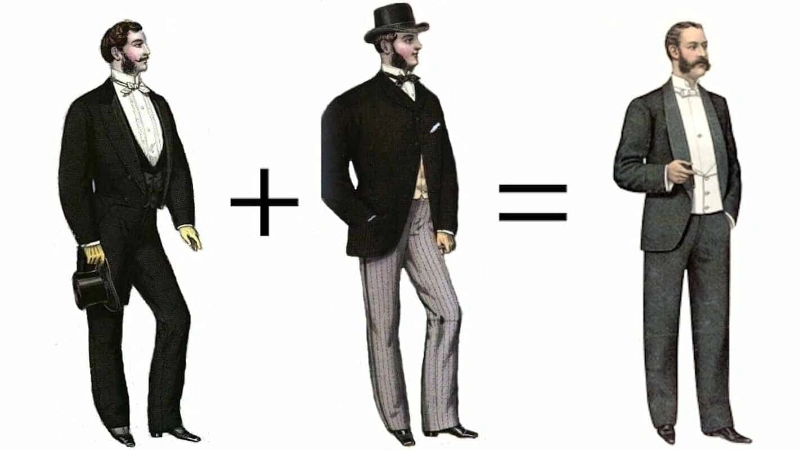
The year was 1886. James Brown Potter, a wealthy New York socialite, had recently dined with the Prince of Wales in England. The Prince wore a short, tailored evening coat, a radical departure from the long formal tailcoats that dominated men’s eveningwear at the time. Potter was impressed. He brought the idea home to America.
That autumn, he debuted the look at the Tuxedo Park Country Club in New York, a gated retreat for the East Coast elite. The style caught on almost instantly within that crowd, and the location gave the jacket its permanent name: the tuxedo.
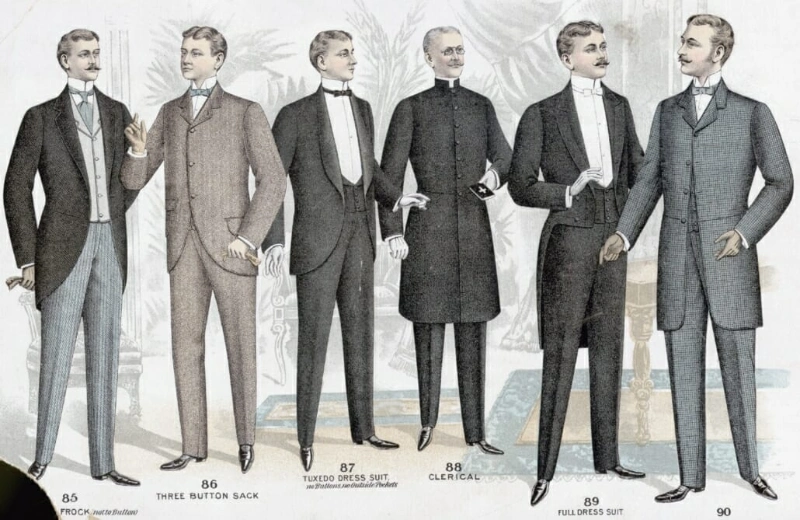
The London tailor behind the original design was Henry Poole and Co. of Savile Row, already one of the most respected names in bespoke tailoring. Their version for the Prince of Wales was simpler, cleaner, and far more practical for a long evening than the stiff formal alternatives of the era.
By the early 1900s, the tuxedo had crossed the Atlantic and was firmly established as the dress code for evening events across America and Europe. Hollywood cemented its status in the following decades, with actors like Cary Grant and Fred Astaire making it synonymous with effortless sophistication.
More than 130 years later, the silhouette has barely changed. That’s not inertia but a design that got it right the first time.
3. The Anatomy of a Tuxedo Jacket
Understanding what a tuxedo jacket is made of helps you appreciate why every detail exists. Nothing on this garment is accidental. Each element has a purpose, and together they create a silhouette that is instantly recognizable.
The Lapels
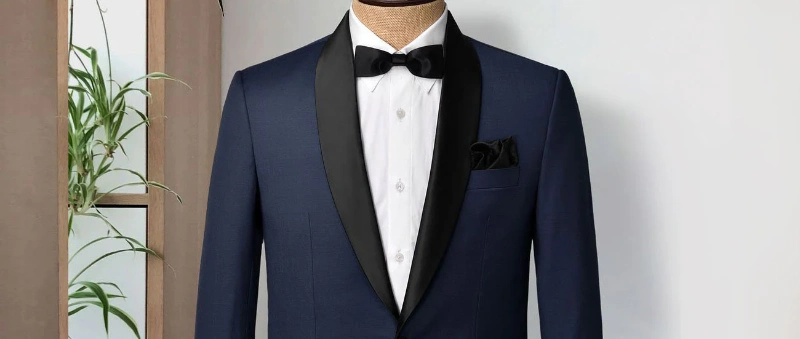
The lapel is always the first thing people notice, and on a tuxedo jacket, it always comes faced in satin or grosgrain silk. That contrast between the matte body of the jacket and the subtle sheen of the lapel is the jacket’s signature.
There are two classic lapel styles.
- The peak lapel points upward and outward toward the shoulder, creating a strong, angular frame around the chest. Confident and traditional.
- The shawl collar, by contrast, is a single continuous curve with no notch or break. It’s softer, more relaxed, and carries a certain Old Hollywood ease that the peak lapel doesn’t.
Notch lapels, standard on most suit jackets, are almost never seen on a proper tuxedo.
The Buttons
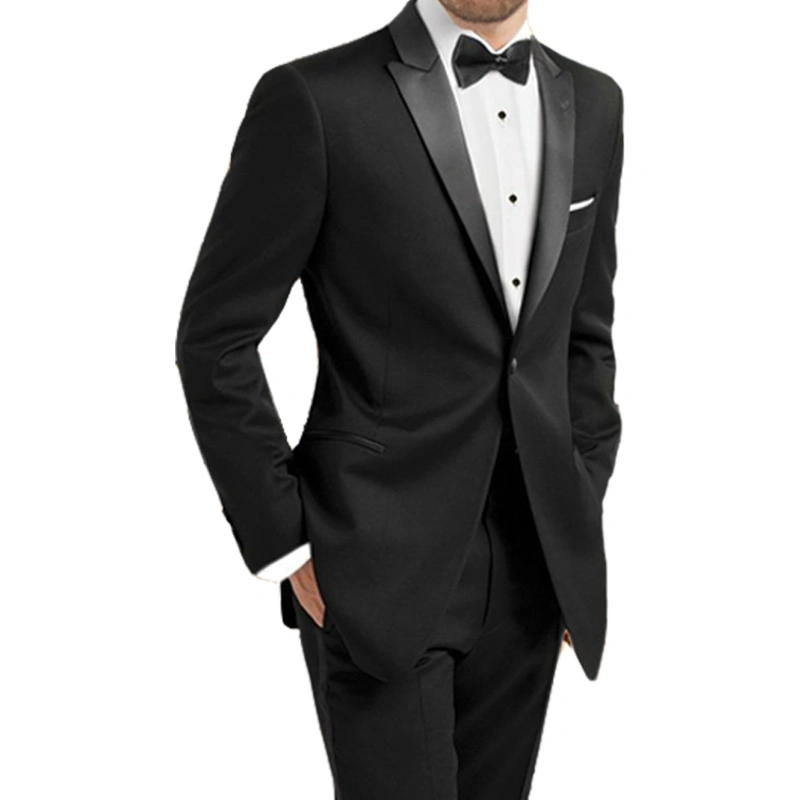
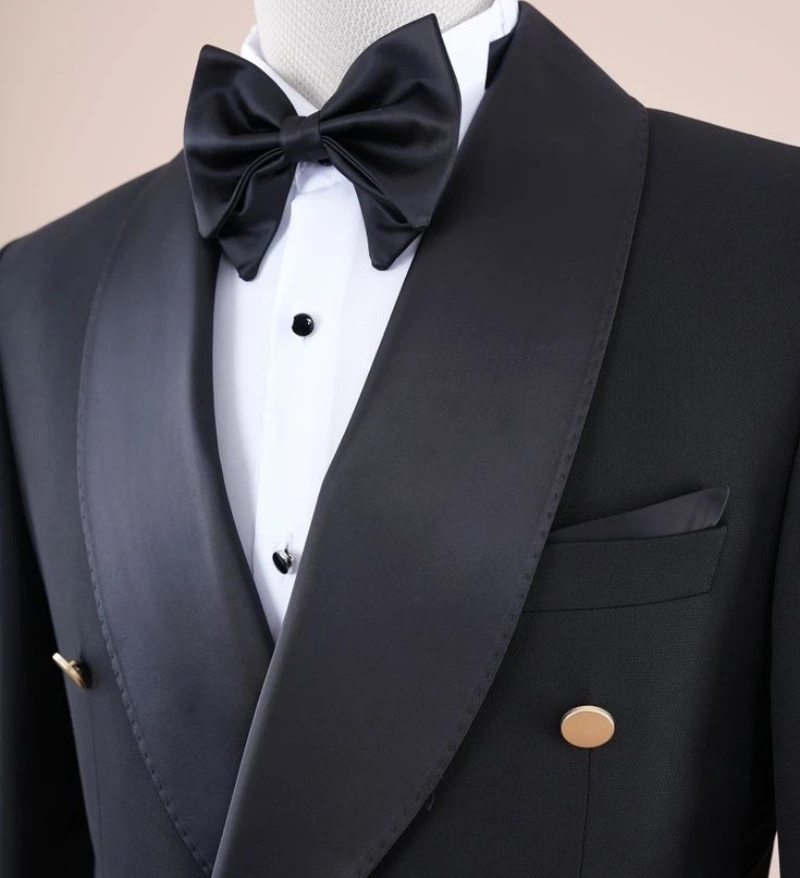
We have a tuxedo jacket, buttons are covered in silk or faced in satin. They are not decorative. They are intentionally understated, designed to blend into the jacket rather than draw attention. Exposed plastic or horn buttons are a tell-tale sign that you’re looking at a suit jacket, not a tuxedo.
The most classic configuration is a single button. It keeps the forehead clean and the silhouette unbroken. Double-breasted tuxedos exist and have their own appeal, but they require more confidence to pull off and suit fewer body types.
The Pockets
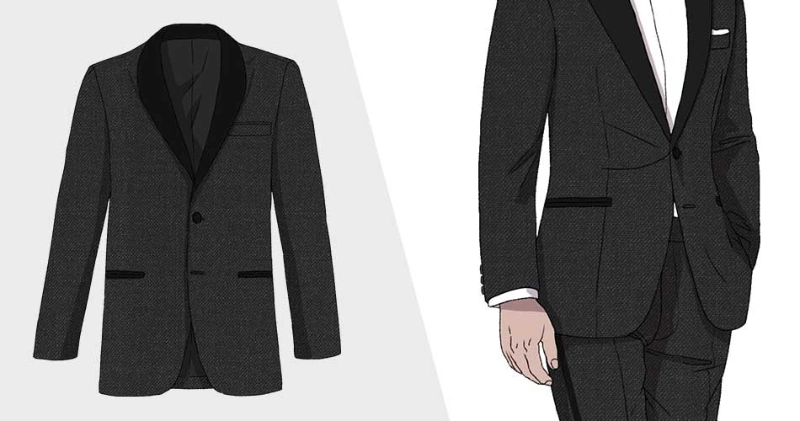
Tuxedo jackets use thrown pockets, sometimes called besom pockets. These are flush against the jacket with no flap covering them. The result is a cleaner, more streamlined front. Flap pockets, the standard on suit jackets, would interrupt that line and tip the balance toward casual.
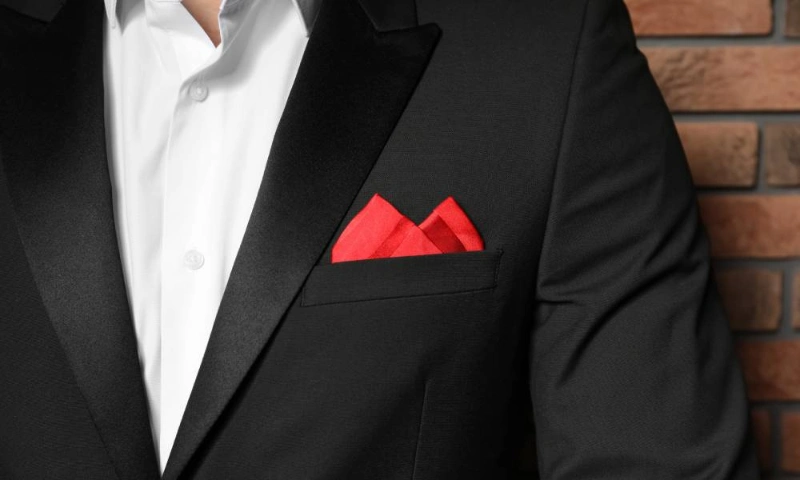
A breast pocket is present but serves one purpose only: a white pocket square, folded flat.
The Vents
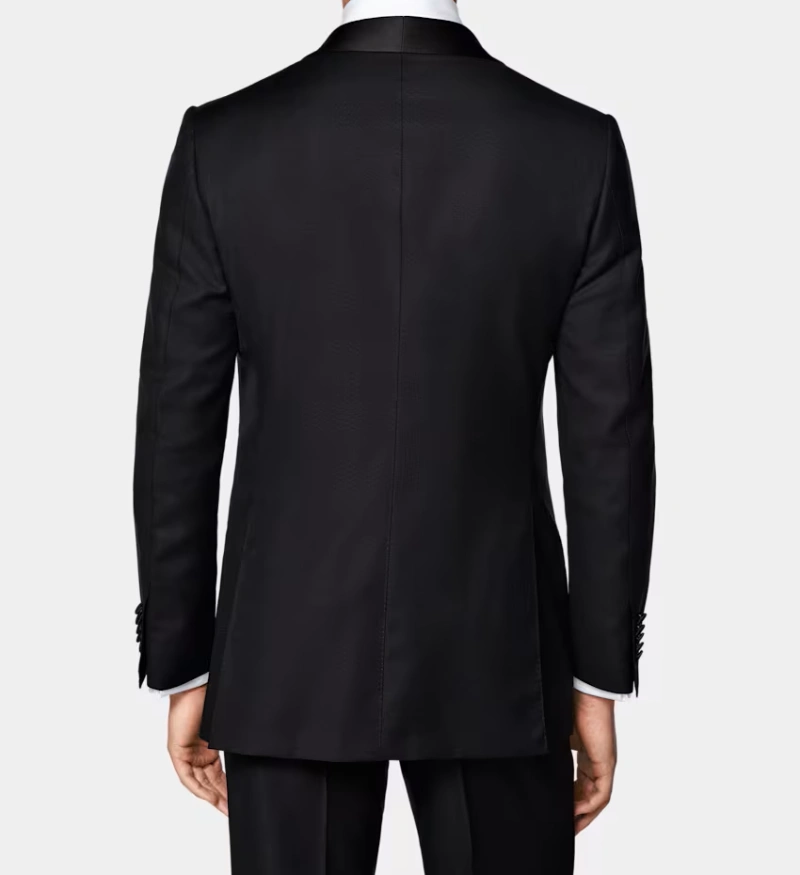
Traditional tuxedo jackets have no vents at all. This traces back to the garment’s origins as seated eveningwear, where a clean, unbroken back line was considered more refined.
The Fabric
The body of a tuxedo jacket is typically crafted from fine wool, wool barathea, or wool crepe. These fabrics hold their shape well through a long evening and drape cleanly under low light.
Velvet is a legitimate alternative for winter events and carries its own kind of quiet confidence. What you want to avoid is anything with visible texture or pattern.
4. Tuxedo Jacket vs. Suit Jacket: What’s the Actual Difference?
Most men own a suit. Far fewer own a tuxedo. The two jackets may look similar on a hanger. On a person, in the right setting, the difference is immediately apparent.
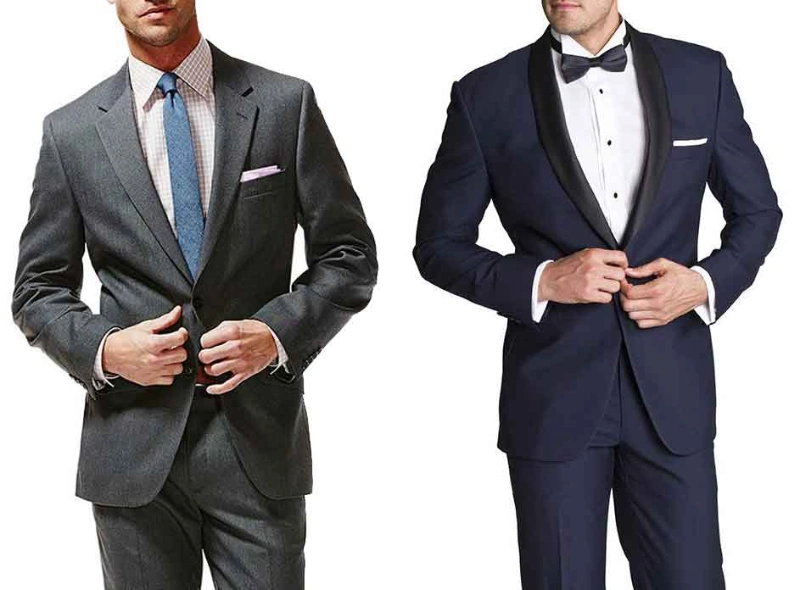
Fabric accents are the clearest tell.
- A suit jacket is made entirely from one fabric, lapels included.
- A tuxedo jacket breaks that rule deliberately. The satin lapels catch the light differently from the wool body, and that contrast is the point. Remove it, and you no longer have a tuxedo.
The buttons matter more than most people realize. Covered silk buttons sit quietly against the jacket. They don’t compete for attention. Standard suit buttons, regardless of quality, simply read as informal in a black-tie context.
Pockets tell the same story. Throw pockets on a tuxedo keep the front face of the jacket clean and uncluttered. The flap pocket on a suit is practical and fine for daytime. At a formal evening event, that flap looks out of place in a way that’s hard to articulate but easy to notice.
The trouser stripe is often overlooked. A proper tuxedo is a complete system. The trousers carry a single satin or grosgrain braid down the outer seam, echoing the lapel facing. Wearing a tuxedo jacket with plain suit trousers breaks the coherence of the look entirely.
| Feature | Tuxedo Jacket | Suit Jacket |
|---|---|---|
| Lapel Facing | Satin or grosgrain silk | Same fabric as the jacket body |
| Buttons | Silk-covered or satin-faced | Plastic, horn, or wood |
| Pockets | Jetted, no flaps | Flap pockets (standard) |
| Trouser Stripe | Silk braid down the side seam | No stripe |
| Back Vent | None, or double side vents | Single center vent (common) |
| Occasion | Evening formal, black tie | Business, weddings, everyday wear |
5. What to Wear With a Tuxedo Jacket
The jacket is only the foundation. What you pair with it determines whether the entire look lands or falls apart.
The Shirt
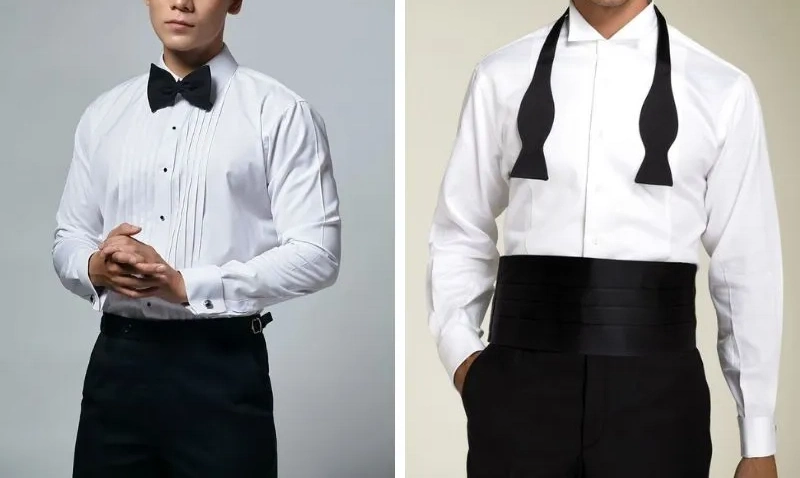
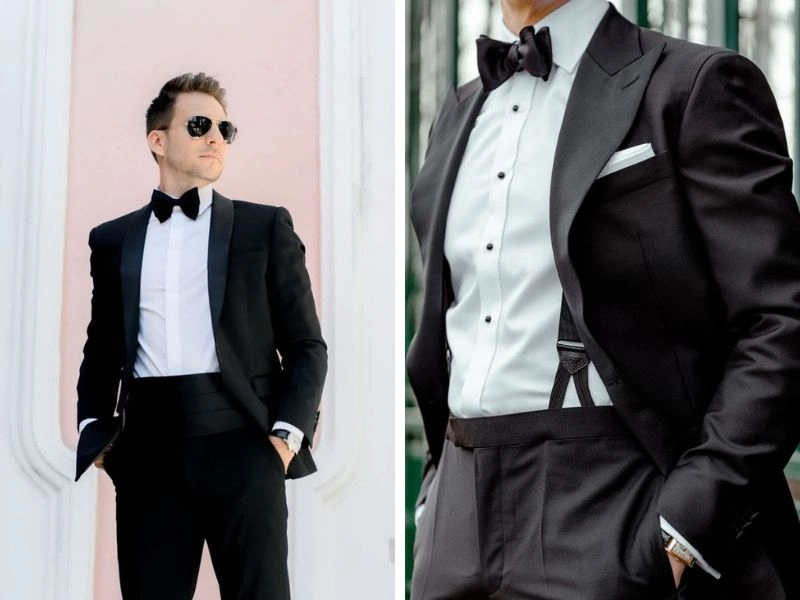
A tuxedo demands a dress shirt, but not just any dress shirt. The two classic options are a pleated front shirt and a piqué bib shirt. The piqué bib, with its textured white cotton panel down the front, is the more formal of the two and pairs particularly well with a shawl collar tuxedo. The pleated front is slightly more relaxed but still entirely appropriate.
The collar choice matters. A turndown collar is the most modern option and works well in most settings. A wing tip collar is more traditional and pairs naturally with a bow tie, though it has fallen slightly out of favor in recent decades. Either is correct. A spread collar business shirt is simply not correct, no matter how white or well-pressed it is.
The Neckwear
A bow tie. Always a bow tie.
A long necktie with a tuxedo is one of the most persistent style mistakes in men’s formalwear. It is not a relaxed alternative. It is simply incorrect for a black tie.
The bow tie, ideally in black silk or grosgrain, was designed alongside the tuxedo as part of the same dress code system.
It should also be a real bow tie, one that you tie yourself. A pre-tied bow tie is a practical shortcut, but a hand-tied bow tie with its natural, slightly imperfect shape signals that you understand the tradition rather than just approximating it.
The Waist
You have two options for covering the waistband: a cummerbund or a waistcoat.
A cummerbund is a pleated sash worn around the waist, always with the pleats facing upward. It originated in British India as a lightweight alternative to a waistcoat in warm climates and has remained a fixture of black-tie dressing ever since. It should match the bow tie, typically in black silk or grosgrain.
A waistcoat, or vest, is the more formal of the two options. A low-cut, single-breasted white or black waistcoat works well under a tuxedo and adds a layer of structure to the overall look. If you’re wearing a double-breasted tuxedo jacket, you can skip the waist covering entirely, as the jacket itself handles that line.
The Shoes
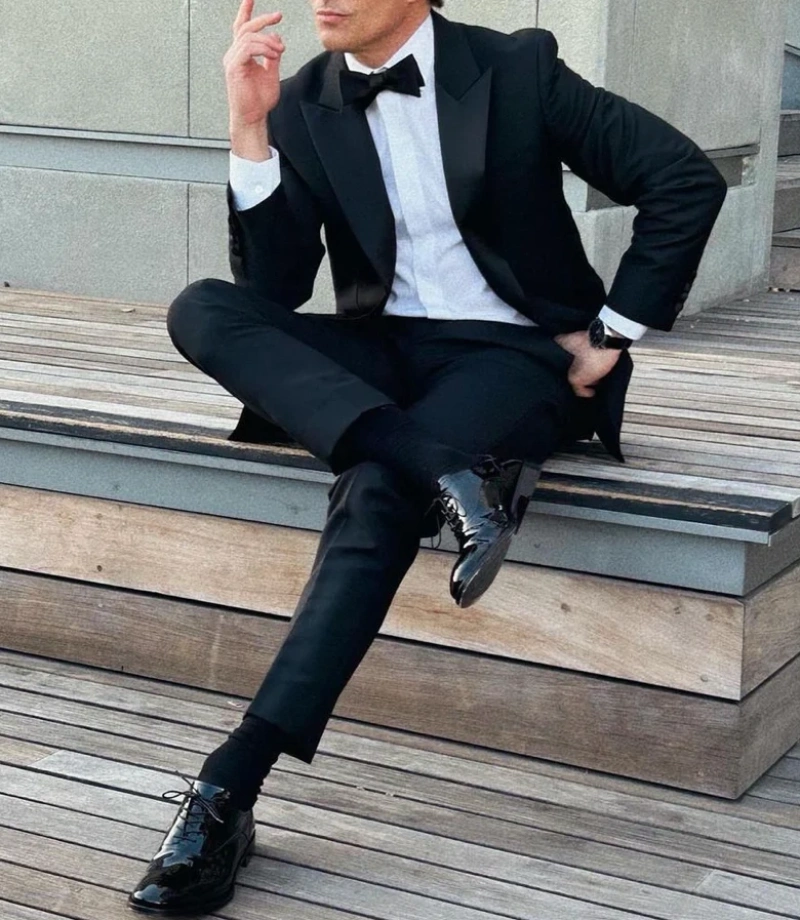
The classic choice is a black patent leather Oxford, sometimes called a court shoe. The high-gloss finish mirrors the satin details on the jacket and ties the whole look together visually.
Black velvet slippers are an excellent alternative, particularly for dinners and seated events. They carry a slightly more relaxed confidence and have a long history in black-tie dressing. Many of the best-dressed men in the world reach for velvet slippers over patent leather.
What does not work is a standard black leather dress shoe, no matter how polished. Matte leather belongs with a suit. For a tuxedo, the finish of the shoe should echo the finish of the jacket.
The Pocket Square
One white pocket square, folded flat into the breast pocket. That’s it. No patterns, no colors, no elaborate folds. The flat white square is not a missed opportunity for personality. It is the correct choice, and it completes the look without competing with it.
6. When Should You Wear a Tuxedo Jacket?
The tuxedo jacket is a garment with a specific purpose, and wearing it at the wrong moment is just as much a misstep as wearing the wrong thing to a black-tie event.
Black Tie Events
When an invitation says “black tie,” a tuxedo is not optional. It is the expected dress code, and arriving in a dark suit, however well-fitted, signals that you either didn’t read the invitation carefully or chose to ignore it.
Black-tie occasions typically include gala dinners, charity fundraisers, opera and ballet evenings, formal award ceremonies, and certain private members’ club events. These are occasions where the formality of the dress code is part of the experience itself. Dressing correctly is a form of respect, both for the event and for the other guests.
Weddings
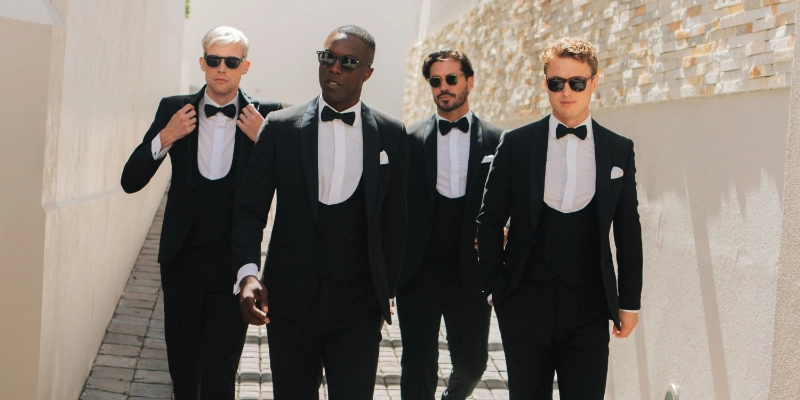
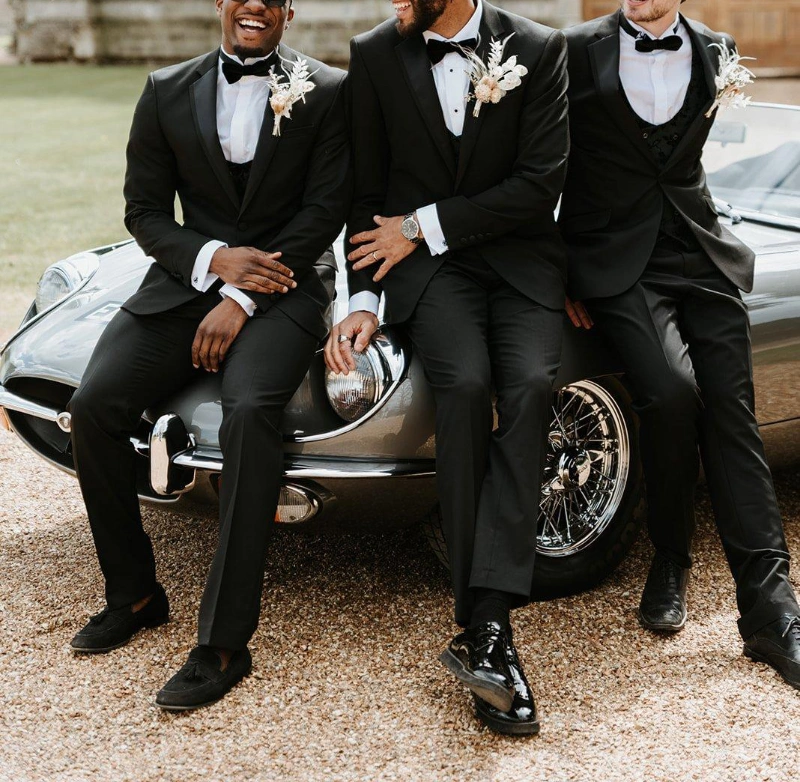
Tuxedos at weddings follow a simple logic. If the ceremony takes place in the evening, particularly after 6 PM, and the reception is a formal seated dinner, a tuxedo is entirely appropriate for the groom and groomsmen. For morning or afternoon ceremonies, a suit or morning coat is the best choice.
Guests at weddings should generally follow the dress code specified on the invitation. If it says black tie, wear a tuxedo. If it says black tie optional, a tuxedo is welcome, but a dark suit is equally acceptable.
The 6 PM Rule
There is a long-standing convention in formal dressing that eveningwear begins at 6 PM. Before that hour, a suit is the appropriate choice regardless of the occasion. After 6 PM, and particularly for seated dinners and formal events, the tuxedo becomes the correct option.
This rule is less rigidly observed today than it once was, but it remains a useful guide. If you are ever uncertain whether a tuxedo is appropriate, ask yourself two questions: Is the event taking place in the evening? And is the setting genuinely formal? If the answer to both is yes, a tuxedo is almost certainly the right call.
Black Tie Optional
This dress code causes more confusion than almost any other. It does not mean that black tie is unlikely or unusual. It means that guests are given the choice between a tuxedo and a dark suit. If you own a tuxedo and the event warrants it, wearing one is never wrong. If you don’t own one, a well-fitted dark suit with a white shirt and a conservative tie is a respectable alternative.
When Not to Wear One
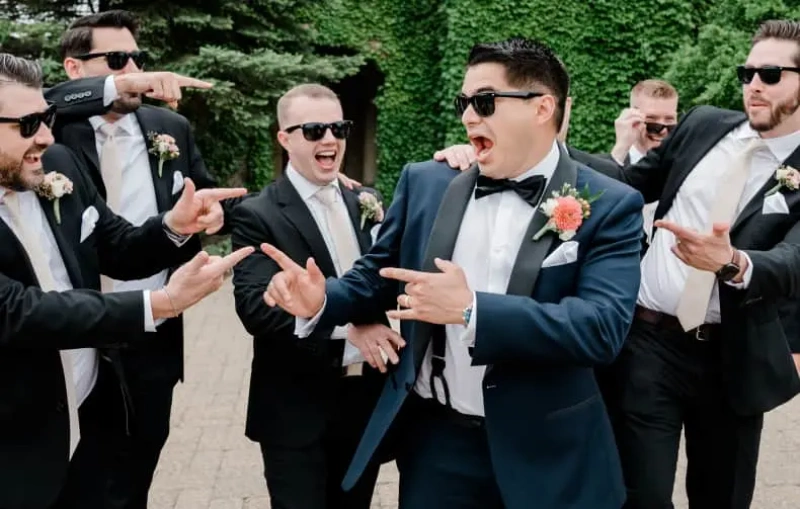
A tuxedo jacket does not belong at a business meeting, a daytime event, a casual wedding, or a restaurant dinner, regardless of how formal the restaurant. It does not belong at a job interview, a cocktail party with no dress code, or any occasion where the host has not signaled that formal dress is expected.
The tuxedo derives its power from being worn in the right context. Wear it too often or in the wrong setting, and that power fades quickly.
7. Modern Variations of the Tuxedo Jacket
The rules of black-tie dressing are well established, but they have never been completely fixed. Over the decades, designers and well-dressed men have found ways to work within the tradition while adding their own interpretation. The result is a broader vocabulary of tuxedo options than most people realize.
Midnight Blue Tuxedo
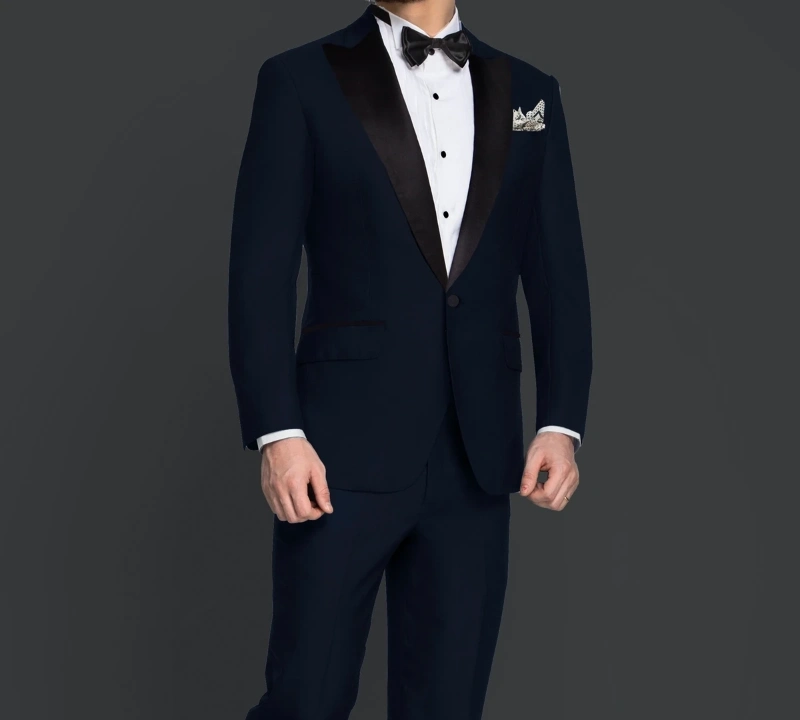
This is the most accepted departure from classic black, and for many tailors, it is actually the preferred choice. Midnight blue reads as darker than black under artificial evening lighting, which means it can look sharper and more intentional in a candlelit ballroom or a dimly lit dining room.
The Duke of Windsor was an early advocate, and the choice has never gone out of fashion since. If you are buying your first tuxedo and want something slightly more interesting than black without stepping outside the rules, midnight blue is the answer.
White and Ivory Tuxedo
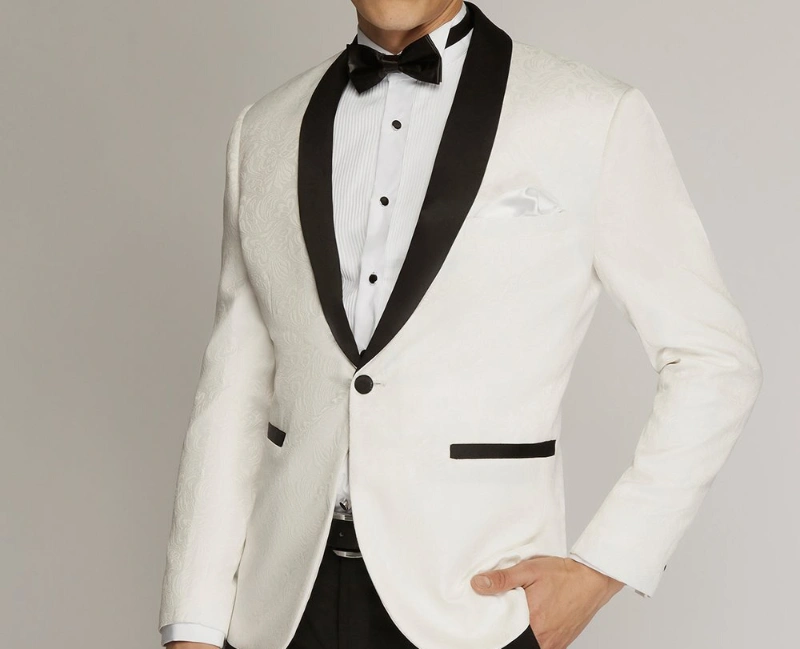
The white dinner jacket has a specific context: warm weather, summer evenings, and resort or tropical settings. It follows the same construction rules as a black tuxedo, with satin lapels and covered buttons, but the white or ivory body creates an entirely different impression. It is lighter, more relaxed, and carries a certain ease that works particularly well at outdoor summer weddings or destination events. It is always worn with black pants, never white.
Outside of those settings, a white dinner jacket can feel forced. Context matters more here than with any other tuxedo variation.
Velvet Tuxedo
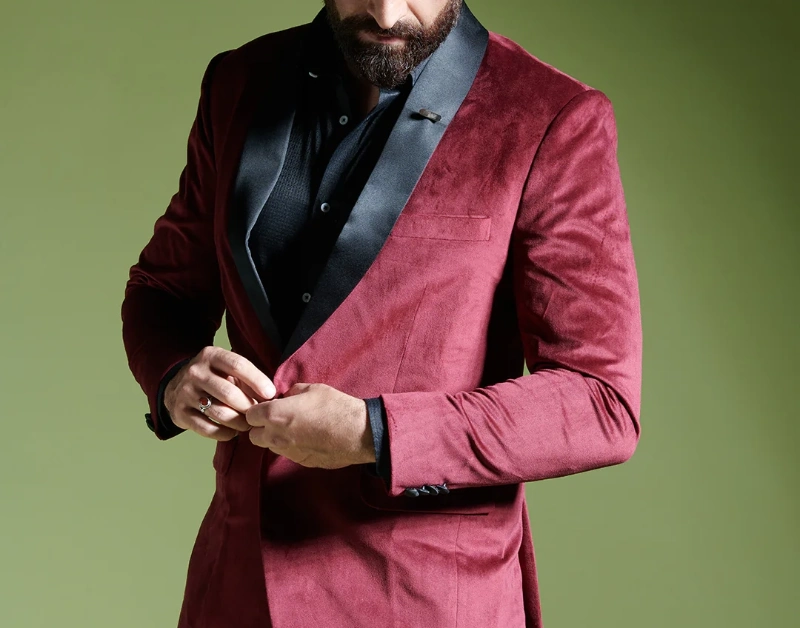
A velvet tuxedo jacket occupies an interesting position. It is not standard black-tie, but it is not outside the spirit of it either. Worn in a deep black, navy, or burgundy, a velvet jacket signals that the wearer understands the rules well enough to bend them deliberately. It works best at winter events, private dinners, and occasions where the atmosphere is more intimate than ceremonial.
The key with velvet is restrained everywhere else. If the jacket is making a statement, the rest of the outfit should not compete with it. A white pique shirt, a black bow tie, and black patent shoes let the fabric speak for itself.
Colored Tuxedos Tuxedo
Beyond midnight blue and white, some men reach for tuxedo jackets in deep green, burgundy, or even a rich camel. These are personal choices rather than dress code choices, and they carry more risk. Done well, with the right occasion and the right confidence, they can be genuinely memorable. Done carelessly, they can look like a costume.
The guiding principle is the same regardless of color. If the jacket retains the satin lapels, covered buttons, and thrown pockets of a proper tuxedo, it belongs to the tradition. If those details are absent, it is simply a colored blazer wearing a tuxedo’s reputation.
Fabric Variations
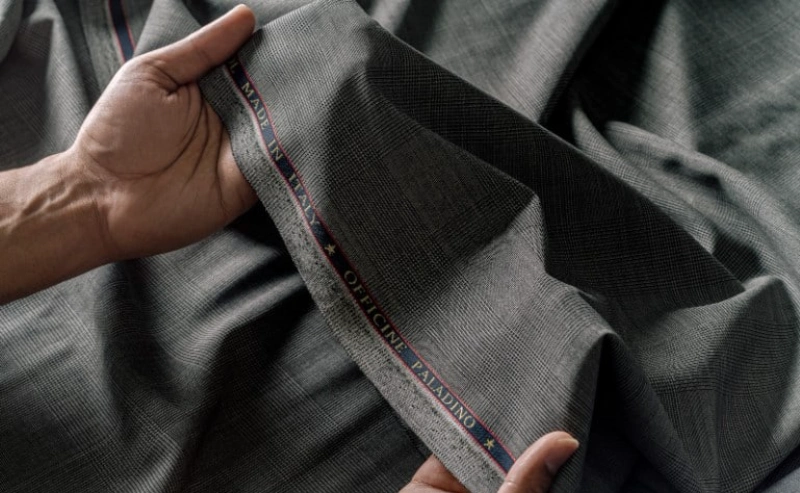
Beyond velvet, some tuxedo jackets are made in silk, mohair, or barathea with a subtle sheen woven into the fabric itself. These are less common but entirely legitimate.
Mohair in particular has a natural luster that works well under evening lighting and holds a sharp edge through a long night. Wool barathea remains the most versatile and practical choice for most men, but fabric experimentation within the tuxedo format has a long and respectable history.
Conclusion
The tuxedo jacket is one of the few garments in men’s fashion that has remained essentially unchanged for over a century. Trends have come and gone, dress codes have loosened, and wardrobes have become increasingly casual. The tuxedo watched all of it happen and remained exactly where it was.
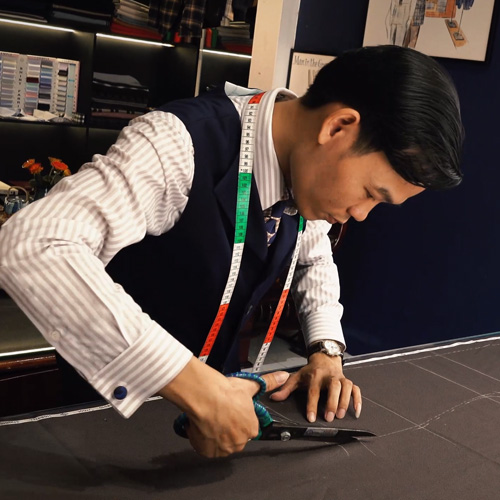
Created from my passion for sartorial that I discovered through learning and working in the field, YOURSUITTREND is dedicated to providing in-depth knowledge, expert styling tips, and the latest trends in men’s tailored fashion. If you ever come to Vietnam, let’s grab a glass 🙂